
Yes — a Ford F-150 can qualify for the Section 179 deduction, but only if it meets specific IRS rules. In most cases, the key factor is the truck’s Gross Vehicle Weight Rating (GVWR) and how it’s used for business. If your F-150 is over 6,000 lbs GVWR and you use it more than 50% for qualified business purposes, you may be able to deduct a large portion of the purchase price in the year you put it into service.
What is Section 179?
Section 179 is a tax rule in the United States. It lets businesses write off the full cost of certain equipment in the same year. Instead of spreading the cost over many years, you can deduct it all at once.
This rule helps businesses save money on taxes. It encourages business owners to buy equipment and grow their business.

Credit: www.kenwilsonford.com
How Does Section 179 Work?
When you buy a qualifying item, you can deduct its full price from your taxable income. For example, if you buy a truck for $40,000, you can deduct $40,000 right away. This reduces your tax bill.
There is a limit to how much you can deduct each year. In 2024, the max deduction is $1,160,000. Also, the total equipment you buy cannot exceed $2,890,000. These numbers change every year.
Section 179 works only for new or used equipment used for business. It must be more than 50% used for business purposes. If you use it less, you cannot deduct the full amount.
What Equipment Qualifies for Section 179?
Many types of equipment qualify. These include:
- Trucks and vans
- Computers and software
- Office furniture
- Machinery
- Business vehicles
For vehicles, there are special rules. Not all vehicles qualify the same way. Some have limits on how much you can deduct.
Does the Ford F150 Qualify for Section 179?
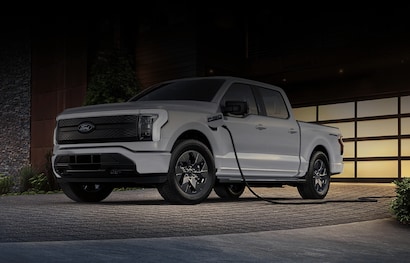
Yes, the Ford F150 can qualify for Section 179. But it depends on how you use it and which model you buy.
The IRS has special rules for trucks. They look at the truck’s weight. The Ford F150 is a light-duty truck. It usually weighs less than 6,000 pounds.
For trucks under 6,000 pounds, the max Section 179 deduction is $11,160 for cars and $11,560 for trucks and vans. This is much lower than the full $1,160,000 limit.
But, if the Ford F150 is a heavier model and weighs more than 6,000 pounds, it can qualify for a bigger deduction. Some F150 models do weigh over 6,000 pounds. These are usually heavy-duty versions or trucks with special equipment.
Weight And Business Use Matter
The truck must be used more than 50% for business. If you use it only 40% for business, you cannot take the full deduction. The deduction is limited by how much you use it for work.
If your Ford F150 weighs over 6,000 pounds and is mostly for business, you can deduct up to $1,160,000 under Section 179 in 2024.
If it weighs less, the deduction limit is much smaller.
Why Does Weight Matter?
The IRS classifies vehicles based on their weight. This is to prevent people from writing off personal cars as business equipment.
Heavy trucks over 6,000 pounds get larger deductions. Light trucks and cars get smaller limits.
This rule encourages businesses to buy trucks that are truly for work, not for personal use.
How to Check Your Ford F150’s Weight
You can find the weight on the truck’s door sticker. It is called the Gross Vehicle Weight Rating (GVWR). It shows the max weight the truck can carry safely.
If the GVWR is 6,000 pounds or more, the truck qualifies for the bigger Section 179 deduction.
Other Section 179 Rules for the Ford F150
Besides weight and business use, these rules apply:
- The truck must be bought and put into use in the same tax year.
- You must use the truck more than 50% for business.
- You cannot deduct more than your business income.
- The truck must be new or used, but new to you.
Example: Using Section 179 on a Ford F150
Let’s say you buy a Ford F150 that weighs 6,200 pounds. You pay $50,000 for it. You use it 80% for your business.
You can deduct up to $50,000 x 80% = $40,000 under Section 179. This reduces your taxable income by $40,000.
This means you pay less tax this year. It helps your business save money.
When You Cannot Use Section 179
Section 179 does not apply if:
- You use the truck less than 50% for business.
- You rent the truck instead of buying.
- You buy the truck for personal use only.
- You already reached your deduction limit for the year.
Credit: www.woodyfolsomford.net
Other Tax Benefits for Ford F150 Buyers
If Section 179 does not apply, there are other options. You can use bonus depreciation. It lets you deduct a large part of the truck’s cost in the first year.
Also, you can depreciate the truck over several years. This means you write off part of the cost every year.
Talk to a tax advisor to find the best option for your business.
Summary Table: Ford F150 and Section 179
| Condition | Weight | Business Use | Section 179 Deduction Limit (2024) |
|---|---|---|---|
| Light F150 model | Under 6,000 lbs | More than 50% | $11,560 max |
| Heavy F150 model | 6,000 lbs or more | More than 50% | Up to $1,160,000 |
| Any model | Any weight | Less than 50% | No Section 179 deduction |
Final Thoughts
The Ford F150 can qualify for Section 179 tax deduction. It depends on the truck’s weight and business use. If it weighs over 6,000 pounds, you can claim a large deduction. If it weighs less, the deduction is smaller.
Make sure you use the truck mostly for business. Keep records of your business use. This helps if the IRS asks questions later.
Buying a Ford F150 for your business can bring tax savings. But check the rules carefully. Talk to a tax expert before making decisions. This way, you get the best benefit for your business.