
Have you ever noticed uneven wear on your tires and wondered what it means? Understanding the types of tire wear patterns can save you money, improve your car’s safety, and extend the life of your tires.
When you recognize these patterns early, you can fix small issues before they turn into big problems. You’ll discover the most common tire wear patterns, what causes them, and how you can prevent them. Keep reading to protect your vehicle and get the best performance from your tires.
Common Tire Wear Patterns
Tires wear down in different ways based on driving habits and car condition. Understanding common tire wear patterns helps spot problems early. It also improves safety and saves money on repairs. Below are the most common types of tire wear.
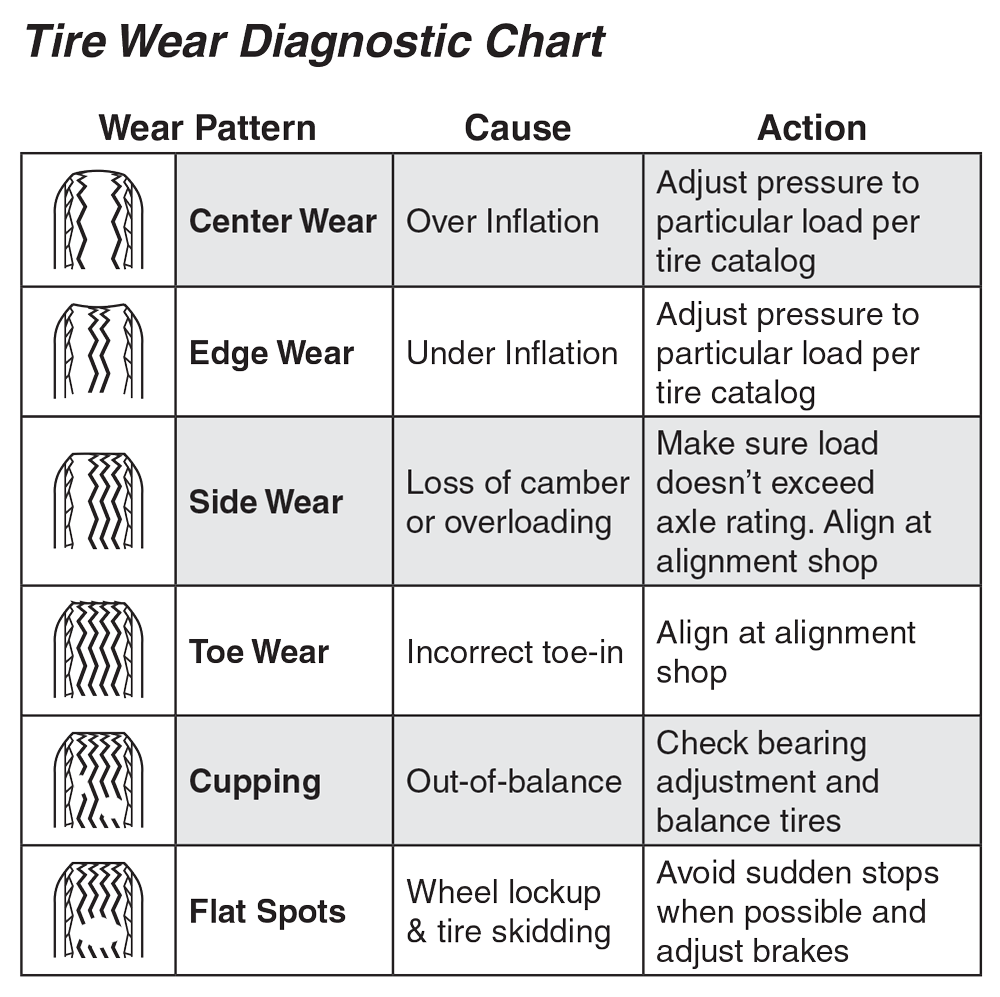
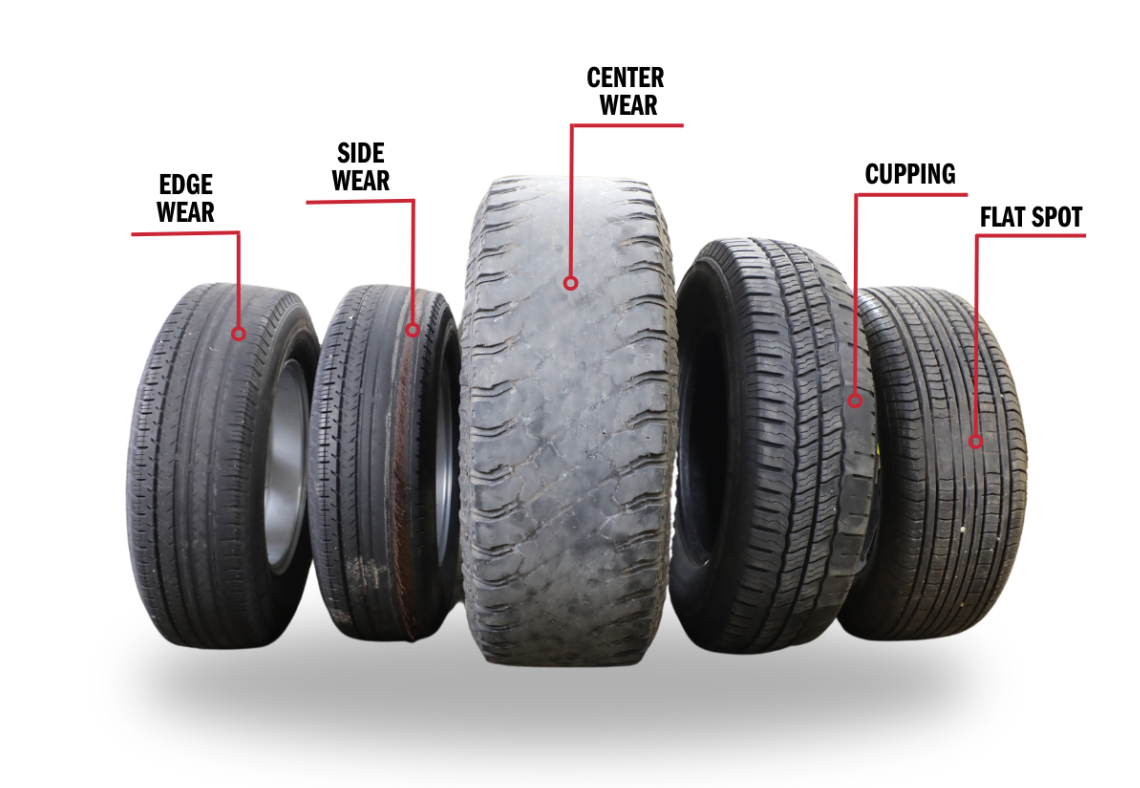
Center Wear
Center wear means the middle part of the tire wears faster. This happens when tires have too much air pressure. Over-inflation causes the center to touch the road more. It can lead to poor traction and shorter tire life.
Edge Wear
Edge wear shows as worn edges on both sides of the tire. This happens if tires have too little air pressure. Under-inflated tires cause the edges to press harder on the road. It lowers fuel efficiency and can cause tire damage.
Cupping
Cupping looks like high and low spots or scallops on the tire. It happens from worn suspension parts or unbalanced tires. Cupping causes noise and vibration while driving. It needs quick attention to avoid more damage.
Feathering
Feathering means the tire tread ribs feel smooth on one side and sharp on the other. It is caused by misaligned wheels. Feathering reduces grip and increases tire noise. Regular alignment checks can prevent this wear.
One-sided Wear
One-sided wear means one side of the tire wears faster than the other. This is often due to poor wheel alignment or suspension issues. It affects handling and can make driving unsafe. Fixing alignment usually stops this wear.
Causes Of Different Wear Types
Tires wear out in different ways. Each type of wear tells a story about what is happening with the tire or vehicle. Understanding the causes helps keep tires safe and lasting longer. Many factors affect tire wear. These include pressure, alignment, suspension, and how you drive.
Overinflation Effects
Too much air pressure causes wear in the center of the tire. The middle part bulges out more. This means the tire touches the road mostly in the center. The edges wear less. Overinflation makes the ride stiff and less comfortable. It can also reduce traction and increase the risk of damage from road bumps.
Underinflation Issues
Low air pressure causes the tire edges to wear faster. The tire flattens out more on the road. This makes the outer edges touch the ground more. Underinflation also causes heat buildup. This can weaken the tire and lead to failure. It reduces fuel efficiency and makes the car harder to control.
Alignment Problems
Incorrect wheel alignment causes uneven wear on the tires. The tires may wear more on one side than the other. It can cause feathering or scalloping patterns. Poor alignment also affects steering and handling. It increases tire wear and reduces safety.
Suspension Wear
Worn suspension parts lead to uneven tire contact with the road. This causes patchy wear or cupping on tires. The tire may bounce or vibrate while driving. Suspension issues affect comfort and tire life. Regular checks can prevent these problems.
Driving Habits Impact
Aggressive driving causes rapid and uneven tire wear. Hard braking, fast cornering, and quick acceleration stress tires. This leads to more heat and faster tread loss. Gentle driving helps tires last longer and stay safer.
Detecting Tire Wear Early
Detecting tire wear early helps keep your vehicle safe and saves money. Tires wear out over time due to road conditions and driving habits. Catching wear signs early prevents accidents and improves fuel efficiency. Regular checks help spot issues before they become serious problems.
Visual Inspection Tips
Look closely at your tire tread and sidewalls. Check for cracks, cuts, or bulges. Uneven tread wear shows as smooth spots or deep grooves. Use a bright light for better visibility. Clean tires make spotting damage easier. Inspect tires at least once a month.
Using Tread Depth Tools
Tread depth tools measure how much tread remains. Insert the tool into the tire grooves. Read the measurement on the scale. Tires need at least 2/32 inches of tread to be safe. Replace tires with low tread to avoid slips. Tread depth tools are affordable and easy to use.
Monitoring Tire Pressure
Check tire pressure regularly with a gauge. Proper pressure keeps tires wearing evenly. Low pressure causes more wear on edges. High pressure wears the center tread faster. Adjust pressure to your vehicle’s recommended level. Proper inflation improves handling and fuel economy.
Noticing Vehicle Handling Changes
Pay attention to how your vehicle drives. Pulling to one side can signal tire wear. Vibrations or shaking may mean uneven tread or damage. Longer stopping distances also point to worn tires. Strange noises during driving could be tire related. Report handling issues to a mechanic quickly.
Credit: www.alltrailer.ca
Fixing Tire Wear Problems
Fixing tire wear problems is important to keep your car safe and save money. Tires wear out for many reasons. Some issues you can fix by yourself. Others need help from a mechanic. Addressing tire wear early stops bigger problems.
Proper Tire Inflation
Check tire pressure often. Use a tire gauge to get the right number. Proper inflation helps tires last longer. Too much or too little air causes uneven wear. Follow your car’s manual for correct pressure levels.
Wheel Alignment Techniques
Wheel alignment means adjusting the angles of tires. Proper alignment keeps tires straight and balanced. Misaligned wheels cause the tires to wear fast. Mechanics use special tools to fix alignment. Regular checks prevent uneven tire wear.
Suspension Repairs
Suspension parts support your car and tires. Broken or worn suspension causes tire problems. It can make tires wear on one side. Fix suspension issues quickly. This keeps your tires even and your ride smooth.
Rotation Schedules
Rotate tires regularly to spread wear evenly. Front and rear tires wear differently. Moving tires around helps them last longer. Check your owner’s guide for rotation timing. Usually, rotate tires every 5,000 to 8,000 miles.
Balancing Tires
Tire balancing makes sure weight is even around the tire. Unbalanced tires cause vibration and uneven wear. A mechanic adds small weights to fix balance. Balanced tires improve driving comfort and tire life.
Preventing Future Tire Wear
Preventing future tire wear keeps your vehicle safe and saves money. Tires last longer with proper care. You avoid sudden blowouts and uneven wear. Follow simple steps to protect your tires and drive smoothly.
Regular Maintenance Routines
Check tire pressure every month. Proper inflation stops uneven wear and improves fuel use. Rotate tires every 5,000 to 7,000 miles. This spreads wear evenly across all tires. Align wheels if the car pulls to one side. Misalignment causes quick, uneven tire damage.
Safe Driving Practices
Drive gently to extend tire life. Avoid hard braking and fast cornering. Sudden stops wear down tires fast. Keep speeds within limits. High speeds increase heat and tire damage. Smooth driving reduces stress on tires.
Choosing Quality Tires
Select tires made for your car type and climate. Cheap tires wear out quickly and may be unsafe. Look for tires with good tread life and grip. Quality tires improve safety and last longer. Match tires in sets for balanced wear.
Adapting To Road Conditions
Drive carefully on rough or gravel roads. Avoid potholes and sharp objects. Rough roads cause cuts and uneven wear. Slow down on wet or icy roads. Slipping tires wear unevenly and lose grip. Adjust driving for weather and road quality.
Credit: www.dextergroup.com

Credit: www.researchgate.net
Conclusion
Tire wear patterns tell a lot about your vehicle’s health. Spotting uneven wear helps you fix problems early. Regular tire checks improve safety and save money. Keep your tires balanced and aligned for longer life. Proper air pressure prevents many common wear issues.
Understanding wear types helps you drive smarter and safer. Don’t ignore strange tire wear—it signals needed care. Stay alert, maintain tires well, and enjoy smooth rides. Your tires deserve attention to keep you safe on roads. Simple steps make a big difference in tire performance.