
Have you ever worried about getting a flat tire while driving? Run-flat tires could be the solution you need.
They let you keep going even after a puncture, saving you time and stress. But did you know there are different types of run-flat tires, each designed for specific needs? Understanding these types can help you choose the right one for your car and driving style.
Keep reading to discover how run-flat tires work and which type fits your lifestyle best. Your next smooth ride might depend on it!
Credit: www.tires-easy.com
Run-flat Tire Basics
Run-flat tires let you drive safely after a puncture. They keep your vehicle moving for a short distance. This allows you to reach a repair shop without changing the tire on the road. Understanding the basics helps you decide if these tires suit your needs.
How Run-flat Tires Work
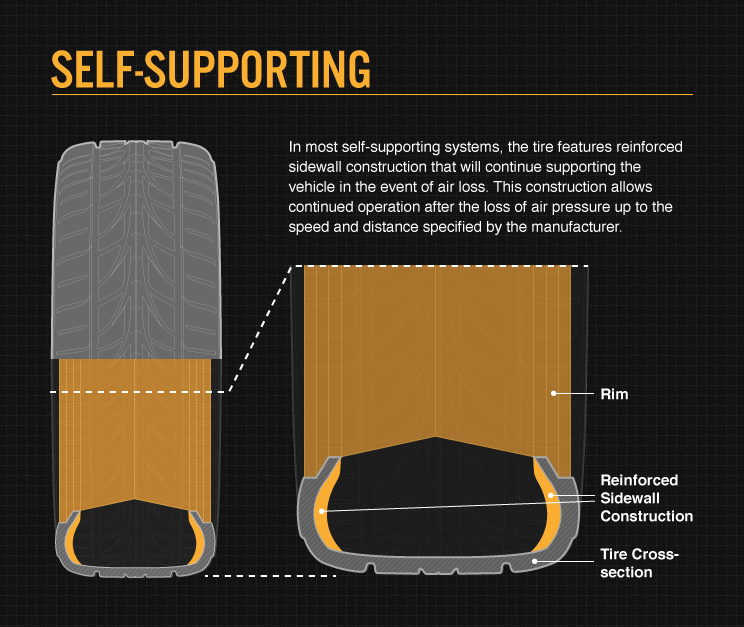
Run-flat tires have stronger sidewalls than regular tires. These sidewalls support the car’s weight even when the tire loses air. This design prevents the tire from collapsing. You can drive up to 50 miles at low speed after a puncture.
Benefits Of Run-flat Tires
They improve safety by reducing the risk of losing control. You avoid dangerous tire changes on busy roads. Run-flat tires save space by eliminating the need for a spare tire. They also reduce the weight of your vehicle.
Common Myths
Some believe run-flat tires always offer a smooth ride. Actually, they may feel stiffer than regular tires. Others think these tires last longer, but their life span is similar. Many worry about high repair costs, but prices vary widely.
Credit: www.tempetyres.com.au
Self-supporting Tires
Self-supporting tires are a popular type of run-flat tire. They allow driving after a puncture or loss of air pressure. This feature helps drivers reach a safe place without changing the tire immediately. These tires add safety and convenience for daily driving.
Design Features
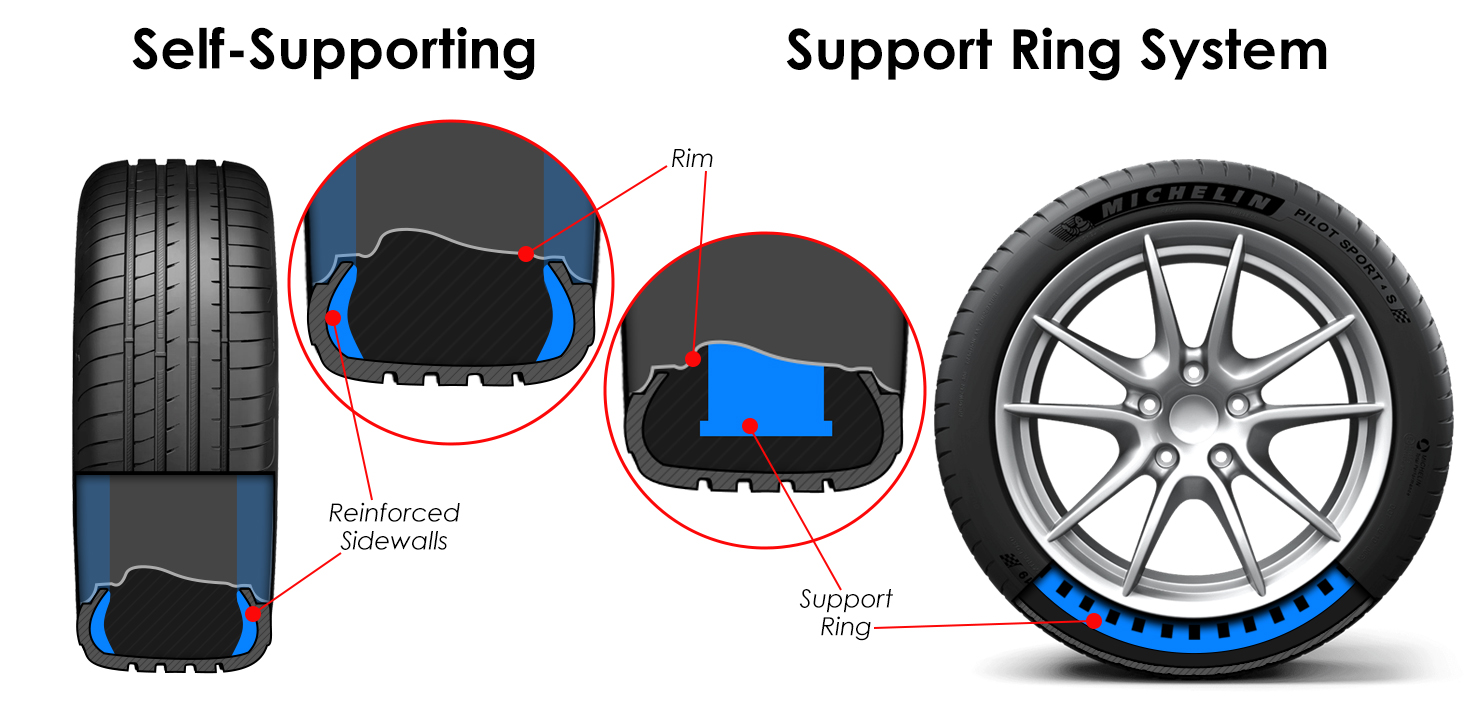
Self-supporting tires have reinforced sidewalls. These thick sidewalls support the car’s weight even without air. The tire structure prevents the tire from collapsing. They use special materials for strength and flexibility. These tires fit standard wheels without extra parts.
Performance Characteristics
These tires maintain stability after a puncture. They allow driving up to 50 miles at low speeds. The ride is firmer than regular tires. Fuel efficiency may decrease slightly due to added weight. They provide good handling and control during emergencies.
Ideal Use Cases
Self-supporting tires suit city and highway driving. They help when traveling in remote areas. Drivers who want quick, safe travel after a flat prefer them. Cars with limited trunk space benefit from these tires. They are common on many modern passenger vehicles.
Support Ring Tires
Support ring tires are a special type of run-flat tires. They help cars keep moving even after a loss of air pressure. These tires have a strong ring inside that holds the tire’s shape. This lets drivers continue driving safely for a short distance. They are common in some cars that need strong tire support.
Structural Components
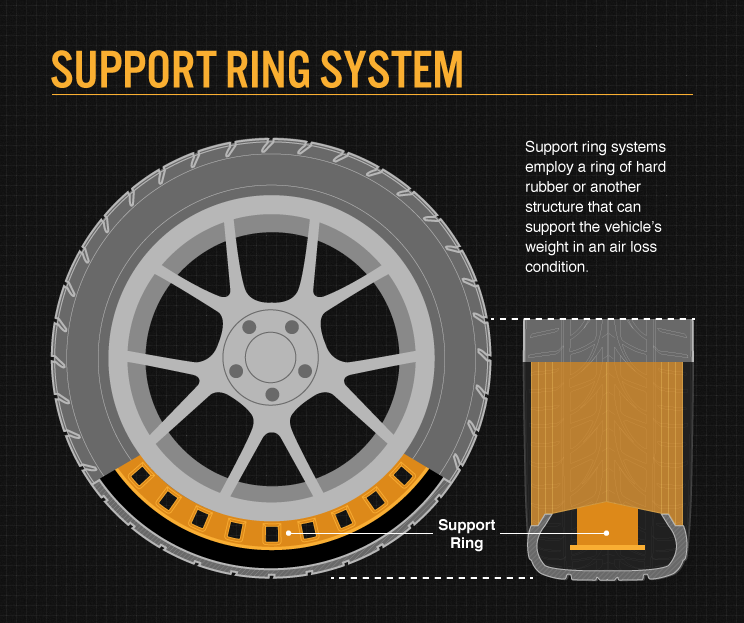
Support ring tires have a stiff ring inside the sidewall. This ring is usually made of hard rubber or plastic. It supports the tire when air pressure drops. The tire’s outer part looks like a normal tire. The inner ring stops the tire from collapsing under the car’s weight. This design helps keep the vehicle stable during a flat.
Advantages And Drawbacks
Support ring tires allow driving after a flat without immediate repair. They offer better safety and control than normal tires. These tires reduce the need for roadside tire changes. On the downside, support ring tires are heavier than regular tires. This extra weight can lower fuel efficiency. They may also provide a firmer, less comfortable ride. Repair options can be limited and more costly.
Vehicle Compatibility
Support ring tires fit certain cars designed for run-flat use. Many luxury and sports cars use these tires for safety. The vehicle must have rims that fit support ring tires. Some cars have sensors that work with these tires. Not all cars can handle the extra weight of support ring tires. Check the vehicle’s manual or manufacturer advice before use.
Self-sealing Tires
Self-sealing tires offer a smart solution for small punctures. They help drivers continue their journey without sudden air loss. These tires have a special layer inside that stops leaks fast. This feature adds safety and convenience on the road.
Sealing Mechanism
The inside of self-sealing tires has a sticky sealant layer. This layer covers the tire’s inner surface. When a sharp object pierces the tire, the sealant fills the hole. It quickly blocks the air from escaping. The sealant works only on small punctures, like nails or screws.
Effectiveness In Punctures
Self-sealing tires handle most small punctures well. They prevent air loss and keep the tire firm. This allows drivers to keep driving without stopping immediately. Larger holes or sidewall damage cannot be sealed by this type. The sealant works best for holes up to 5 millimeters wide.
Maintenance Tips
Check the tire pressure regularly to ensure safety. Inspect the tires for any damage or wear signs. Avoid driving on rough roads that may cause big holes. Replace the tires if the sealant layer wears out. Visit a tire shop for professional checks and refills.
Comparing Run-flat Tire Types
Run-flat tires come in different types, each with unique features. Comparing these types helps drivers choose the best option for their needs. Factors like durability, comfort, and cost play key roles in deciding which run-flat tire suits a vehicle.
Durability And Lifespan
Self-supporting run-flat tires use stronger sidewalls to hold the car’s weight after a puncture. These tires last longer under normal conditions. Support ring types have a solid ring inside the tire to carry the load. Their lifespan depends on the ring’s quality and tire maintenance. Hybrid run-flats combine features from both types, offering balanced durability. Overall, self-supporting tires are the most common and tend to last the longest.
Ride Comfort And Handling
Self-supporting tires often feel stiffer due to reinforced sidewalls. This stiffness can reduce ride comfort on rough roads. Support ring types provide a smoother ride but add extra weight. That weight can affect handling and fuel efficiency. Hybrid tires aim to improve comfort while keeping good handling. Drivers must weigh the trade-off between comfort and safety in run-flat tires.
Cost Considerations
Run-flat tires generally cost more than regular tires. Self-supporting types are usually mid-range in price. Support ring tires tend to be more expensive due to extra parts. Hybrid run-flats often carry the highest price because of advanced design. Replacement and repair costs may also be higher for run-flat tires. Budget and long-term expenses are key factors in choosing the right tire type.
Credit: www.tires-easy.com
Safety And Performance Tips
Run-flat tires offer unique safety and performance benefits. To get the best from them, follow key tips. These tips help keep you safe and extend tire life. Pay attention to installation, pressure, and replacement timing.
Proper Installation
Correct installation is vital for run-flat tires. Only trained professionals should install them. They need special tools and knowledge to mount and balance tires. Poor installation can cause damage and reduce performance. Always check if your service center has run-flat tire experience.
Monitoring Tire Pressure
Run-flat tires need regular pressure checks. They may not show obvious signs when low on air. Use a tire pressure monitoring system (TPMS) to stay informed. Check tire pressure monthly and before long trips. Proper pressure helps maintain handling and fuel efficiency.
When To Replace Run-flat Tires
Run-flat tires wear differently than regular tires. Replace them after a puncture or noticeable damage. Also, change tires when tread depth reaches 2/32 inch. Old tires lose performance even if they look fine. Follow manufacturer guidelines for safe replacement timing.
Future Trends In Run-flat Tires
The future of run-flat tires is shaping up with exciting changes. These tires will become safer, stronger, and better for the environment. Technology and materials are improving fast. This means drivers will get more benefits and fewer worries on the road.
Innovative Materials
New materials make run-flat tires lighter and tougher. Scientists use special rubber blends and strong sidewalls. These materials help tires keep their shape during a puncture. Lighter tires also improve fuel efficiency. This means cars use less gas and emit fewer gases.
Enhanced Performance Features
Run-flat tires will last longer and offer better grip. Advanced designs help tires stay stable at high speeds. They also reduce noise and improve ride comfort. Sensors may be added to warn drivers about low pressure. This makes driving safer and more reliable.
Environmental Impact
Future run-flat tires will focus on eco-friendliness. They will use recyclable materials and cleaner production methods. Better fuel efficiency lowers carbon footprints. These tires help reduce waste by lasting longer. The industry is moving toward greener solutions for all drivers.
Conclusion
Run-flat tires come in different types to suit various needs. Each type offers safety and convenience during a tire puncture. Choosing the right one depends on your car and driving style. These tires help you keep control and avoid sudden stops.
They add confidence on the road, especially in emergencies. Understanding these options makes tire shopping easier and safer. Remember, good tires protect you and your passengers. Keep your vehicle ready for any situation with the right run-flat tires.