
Are you sure you’re getting the most out of your tires? Knowing the right type of tire rotation can save you money, improve your car’s performance, and extend the life of your tires.
But with different rotation patterns out there, how do you know which one is best for your vehicle? You’ll discover the main types of tire rotations, why they matter, and how choosing the right one can keep you safe on the road.
Keep reading to unlock the secret to smoother rides and better tire health.
Credit: gotire.com
Common Tire Rotation Patterns
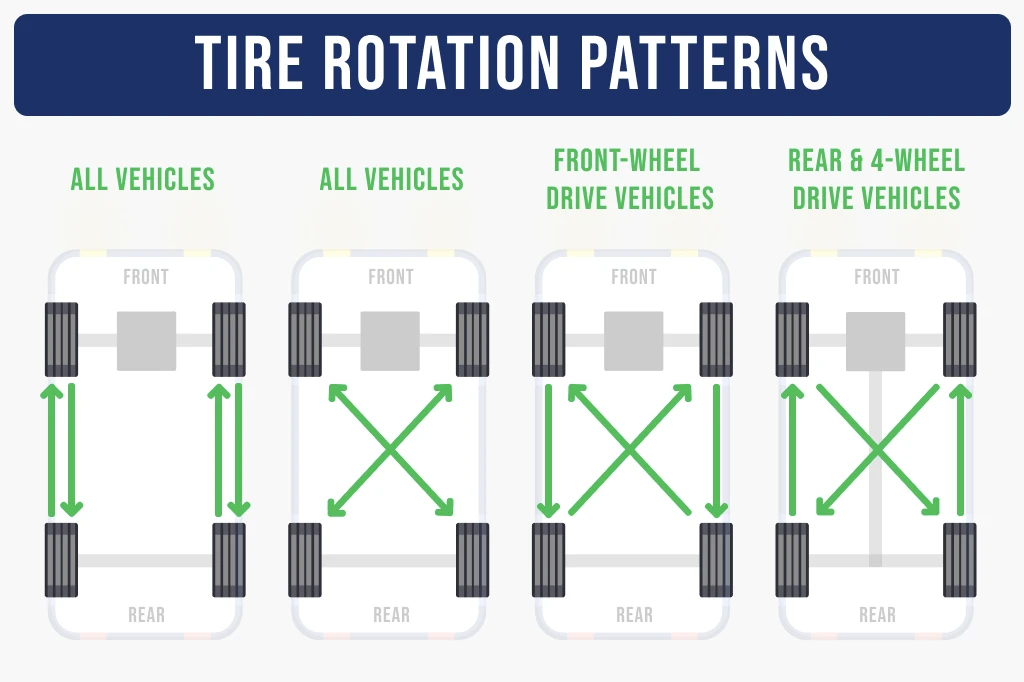
Tire rotation is important for even tire wear and longer tire life. Different vehicles need different rotation patterns. Choosing the right pattern helps maintain balance and safety. Here are some common tire rotation patterns used by many drivers.
Front-to-rear Rotation
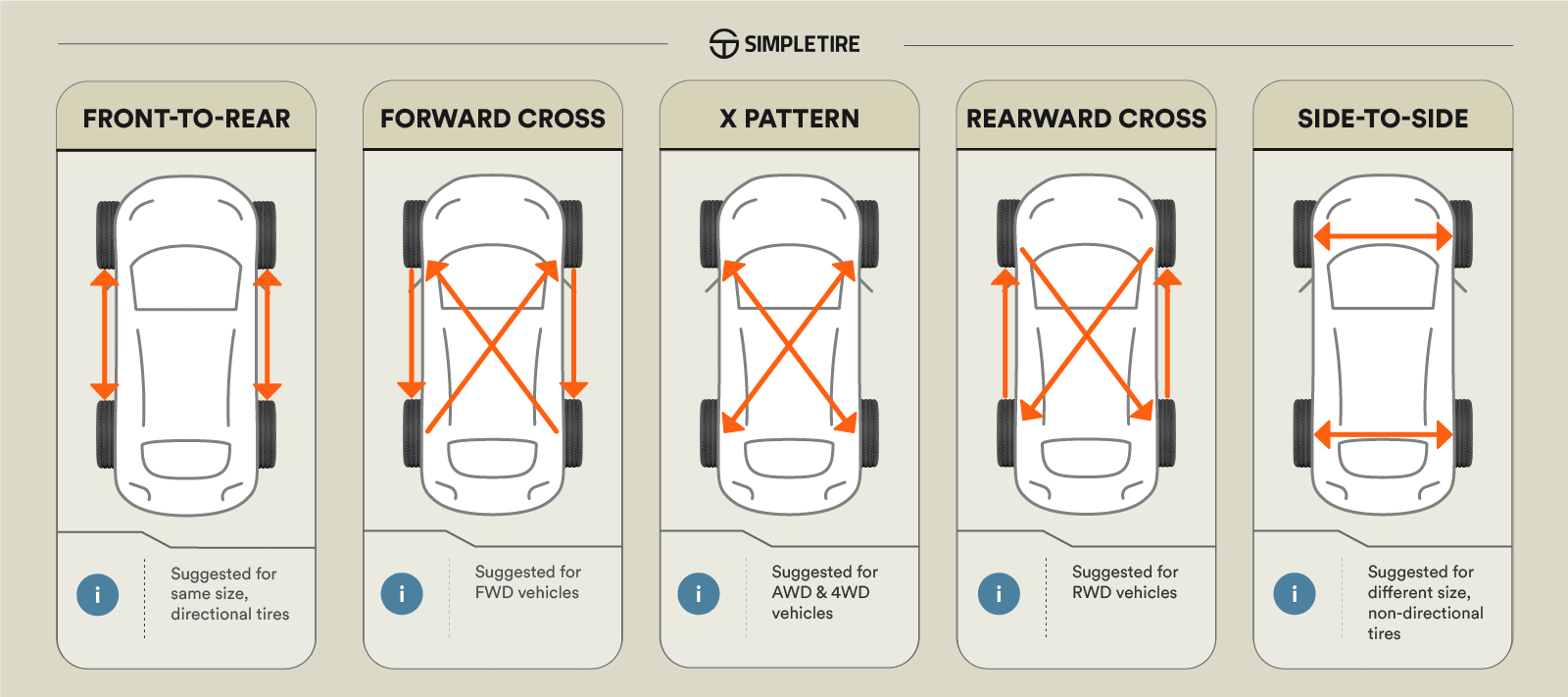
This pattern moves the front tires straight to the rear. The rear tires move straight to the front. It works best for vehicles with the same size tires front and back. Simple and quick, it balances wear between front and rear tires.
Cross Rotation
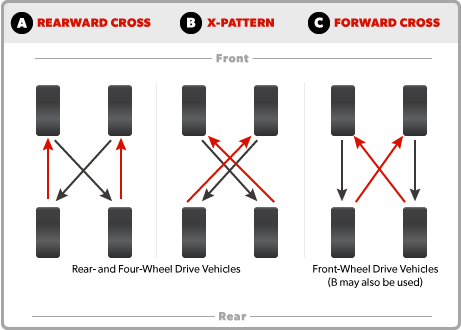
In this pattern, front tires move to the opposite rear positions. Rear tires move straight to the front. It helps tires wear evenly on front-wheel drive cars. Cross rotation improves traction and extends tire life.
X-pattern Rotation
The X-pattern swaps all tires diagonally. Front left moves to rear right. Front right moves to rear left. Rear tires switch to opposite front spots. It suits vehicles with the same tire size on all wheels. This pattern promotes even wear on all tires.
Four-wheel Drive Rotation
This pattern is for four-wheel or all-wheel drive vehicles. It combines front-to-rear and cross rotations. Tires move diagonally and side to side. This method keeps tire wear balanced on all four wheels. It supports better handling and control.
Benefits Of Regular Tire Rotation
Regular tire rotation plays a key role in car maintenance. It helps keep tires in good shape and improves how the vehicle drives. Rotating tires at set times spreads wear evenly. This simple step brings many benefits that save money and increase safety.
Even Tire Wear
Tires wear differently on each position of a car. Front tires often wear faster due to steering and braking. Moving tires from front to back balances the wear. This keeps tires wearing evenly. Even wear means smoother rides and better grip on the road.
Improved Fuel Efficiency
Uneven tire wear can cause more rolling resistance. This forces the engine to work harder and use more fuel. Regular tire rotation reduces this resistance. Cars run more efficiently and use less gas. This helps save money on fuel over time.
Enhanced Safety
Balanced tire wear keeps the car stable. Tires with similar tread depth handle better in rain and snow. Rotation reduces the risk of tire blowouts. This means safer trips for drivers and passengers. Proper tire care reduces accidents caused by tire failure.
Extended Tire Lifespan
Rotating tires helps them last longer. Tires wear out slowly and evenly. This delays the need for new tires. More time on the road means better investment in your vehicle. Regular rotation gives the best value from your tires.
When To Rotate Tires
Knowing when to rotate your tires helps keep your car safe and running smoothly. Tires wear out unevenly due to different positions on the car. Rotating them spreads the wear more evenly. This extends tire life and improves handling. Regular tire rotation can also save money on replacements.
Mileage Guidelines
Most experts suggest rotating tires every 5,000 to 7,500 miles. Check your car’s owner manual for exact numbers. Following this routine helps catch wear early. Some drivers rotate tires more often if they drive in tough conditions. Keeping to these mileage limits keeps tires balanced and safe.
Seasonal Considerations
Changing tires between seasons can be a good time to rotate. For example, when switching from winter to summer tires, rotate them. This keeps wear even and prepares tires for new conditions. Drivers in areas with harsh winters should check tires more often. Seasonal checks help spot problems early.
Signs Your Tires Need Rotation
Uneven tread wear is a clear sign to rotate tires. If one tire looks more worn than others, it needs attention. Your car may pull to one side while driving. Vibration or noise from tires can also signal uneven wear. Catching these signs early improves safety and tire life.
Tools And Techniques
Tire rotation keeps tires wearing evenly. Proper tools and techniques ensure the job is safe and effective. Knowing what equipment to use and how to rotate tires step-by-step helps extend tire life. Safety is also key during the process.
Required Equipment
You need a jack to lift the car. Jack stands hold the car safely in place. A lug wrench loosens and tightens the wheel nuts. A torque wrench ensures nuts are tightened correctly. Gloves protect your hands. Chalk or tape helps mark tire positions.
Step-by-step Rotation Process
Start by loosening the wheel nuts slightly. Use the jack to lift one corner of the car. Place a jack stand under the car for support. Remove the wheel and mark its position. Move the tire to the new position. Repeat for all wheels. Tighten the nuts by hand first. Lower the car and use the torque wrench to tighten nuts fully.
Safety Precautions
Always work on a flat, stable surface. Never rely on the jack alone to hold the car. Use jack stands before removing wheels. Wear gloves to protect your hands. Check the car’s manual for correct lifting points. Tighten wheel nuts in a star pattern. Double-check all nuts before driving.
Tire Rotation For Different Vehicles
Tire rotation helps your tires wear evenly and last longer. Different vehicles need different rotation patterns. This depends on the drive type and vehicle size. Understanding the right rotation keeps your ride smooth and safe.
Front-wheel Drive Cars
Front-wheel drive cars wear their front tires faster. Rotate tires by moving front tires straight back. Move rear tires to the front but switch sides. This pattern balances tire wear and improves handling.
Rear-wheel Drive Cars
Rear-wheel drive cars put more stress on the rear tires. Swap rear tires straight to the front. Cross the front tires to the rear on opposite sides. This helps maintain good traction and extends tire life.
All-wheel Drive Vehicles
All-wheel drive vehicles need even tire wear on all wheels. Use a four-tire rotation pattern that crosses tires diagonally. This keeps the drivetrain balanced and prevents damage. Regular rotation protects your investment.
Trucks And Suvs
Trucks and SUVs often carry heavy loads and face rough roads. Rotate tires by moving the front tires to the rear on the same side. Cross the rear tires to the front. This pattern supports better stability and tire durability.
Credit: simpletire.com
Common Mistakes To Avoid
Proper tire rotation is key for even wear and longer tire life. Many drivers make simple mistakes that reduce the benefits of rotation. Avoid these common errors to keep your tires in good shape. Small habits can lead to big problems if ignored.
Ignoring Manufacturer Recommendations
Each car and tire brand has specific rotation patterns. Not following these guidelines can cause uneven wear. Check your owner’s manual or tire sidewall for rotation advice. Using the wrong pattern may shorten tire life and affect safety.
Uneven Tire Pressure
Unequal tire pressure causes uneven wear and poor performance. Always check and adjust pressure before rotating tires. Low or high pressure can damage tires faster. Proper inflation helps tires wear evenly and last longer.
Skipping Regular Inspections
Skipping tire inspections leads to unnoticed damage and uneven wear. Look for cuts, bulges, or nails before rotation. Catching problems early prevents costly repairs. Regular checks keep your tires safe and reliable.
Credit: www.tirerack.com
Conclusion
Tire rotation keeps your tires wearing evenly and lasting longer. Different types suit different vehicles and driving styles. Regular rotation improves safety and helps save money on replacements. Remember to check your car’s manual for the right rotation pattern. Simple steps make a big difference in tire health.
Stay safe on the road with proper tire care.