
When it comes to engines, the crankshaft is one of the most important parts you need to understand. Whether you’re a car enthusiast, a mechanic, or just curious about how things work, knowing the different types of crankshafts can give you an edge.
You might wonder why some engines perform better or last longer. The secret often lies in the crankshaft design. You’ll discover the main types of crankshafts and how each one affects your engine’s power and efficiency. Keep reading, because the right knowledge can help you make smarter choices for your vehicle or project.
Credit: mechbasic.com
Basic Crankshaft Designs
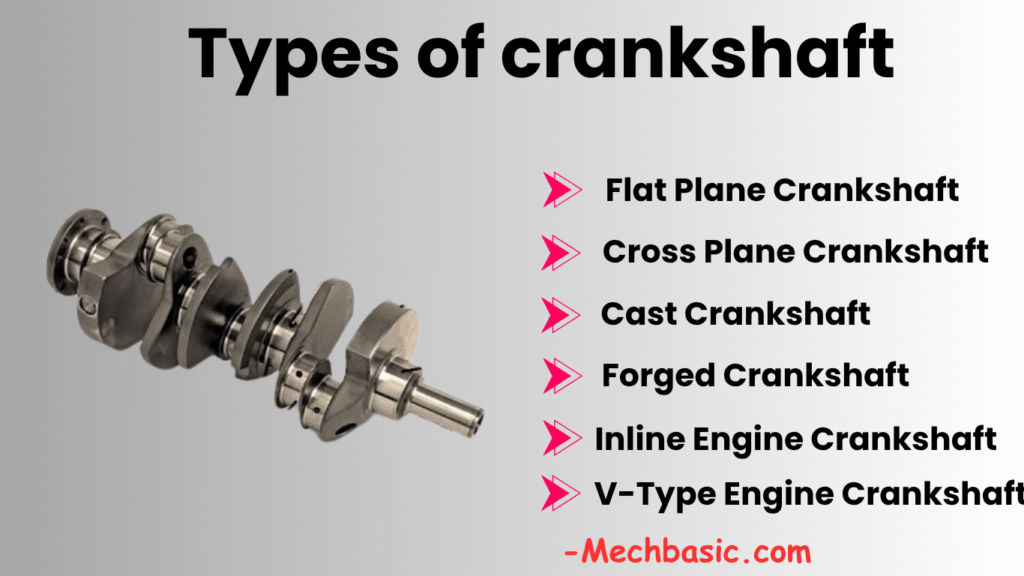
Crankshafts are key parts in engines. They turn the up-and-down motion of pistons into spinning motion. This spinning motion powers cars, bikes, and machines. Different crankshaft designs suit different engines and uses. Basic crankshaft designs vary mainly in shape and balance. These designs affect engine smoothness and power delivery.
Flat Crankshafts
Flat crankshafts have all their crankpins in one plane. This design is simple and easy to make. It is common in single-cylinder and some twin-cylinder engines. Flat crankshafts offer good balance for small engines. They can cause more vibration in larger engines. Still, they work well for many basic engines.
Crossplane Crankshafts
Crossplane crankshafts have crankpins arranged at 90-degree angles. This design is popular in V8 engines. It helps reduce engine vibrations. Crossplane crankshafts create a unique sound many car fans like. They also provide better torque at low engine speeds. This design improves engine smoothness and performance.
V8 Crankshafts
V8 crankshafts are designed specifically for V8 engines. They combine features of flat and crossplane designs. Most V8 crankshafts use the crossplane layout. This helps balance the engine and improve power delivery. V8 crankshafts are strong and built to handle high power. They play a big role in muscle cars and trucks.

Credit: knowledge-swami.com
Material Choices For Crankshafts
Choosing the right material for a crankshaft affects engine strength and durability. Different materials offer unique benefits and suit various engine needs. Understanding these materials helps in selecting the best crankshaft for performance and cost.
Forged Steel Crankshafts
Forged steel crankshafts are strong and tough. They handle high power and stress well. These crankshafts are common in performance and racing engines. The forging process aligns metal grains for better strength. They resist wear and bending under heavy loads.
Cast Iron Crankshafts
Cast iron crankshafts are cheaper to produce. They work well in standard engines with moderate power. Cast iron is good at absorbing vibrations. These crankshafts offer decent strength but less than forged steel. They are popular in everyday cars and trucks.
Billet Crankshafts
Billet crankshafts are made from solid metal blocks. They provide the highest strength and precision. These crankshafts are custom-made for high-performance engines. The machining process allows exact dimensions and smooth finishes. Billet crankshafts are ideal for racing and tuning projects.
Crankshaft Configurations And Engine Types
Crankshaft configurations vary depending on the engine type they serve. Each configuration suits specific engine designs and affects performance. Understanding these setups helps grasp how engines work efficiently.
Inline Engines
Inline engines have cylinders arranged in a straight line. The crankshaft in these engines runs parallel to the cylinder bank. This setup keeps the engine compact and simple. Inline engines are common in small cars and motorcycles. They offer good balance and smooth operation.
V-type Engines
V-type engines feature cylinders in two banks forming a “V” shape. The crankshaft lies between these banks, connecting pistons from both sides. This design makes engines shorter and more powerful. It fits well in cars needing more power in less space. V-type engines often power trucks and sports cars.
Boxer Engines
Boxer engines have cylinders placed flat and opposite each other. The crankshaft runs through the middle of the engine. This layout lowers the engine’s center of gravity. It improves vehicle stability and handling. Boxer engines are popular in some sports cars and aircraft.
Performance Enhancements With Crankshafts
Crankshafts play a key role in engine performance. Enhancing crankshafts can improve power and efficiency. Various methods target different engine needs. Each modification helps engines run smoother and stronger.
Lightweight Crankshafts
Lightweight crankshafts reduce the engine’s rotating mass. This change allows the engine to rev faster. Faster revving means quicker acceleration and better throttle response. Using materials like forged steel or aluminum cuts weight. Less weight also reduces stress on engine parts.
Counterweight Balancing
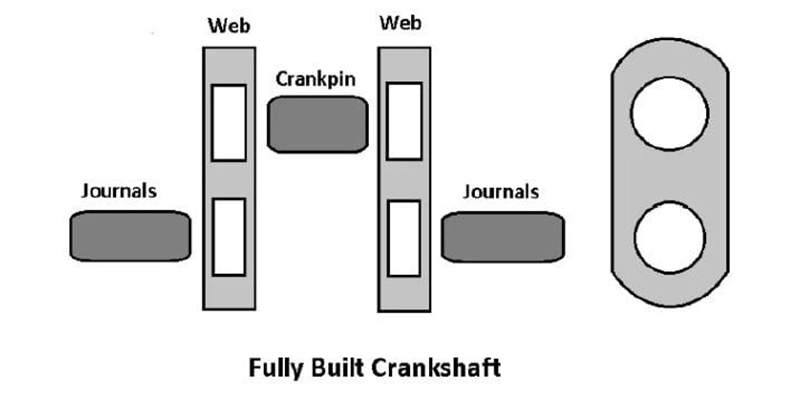
Counterweights balance the crankshaft during rotation. Proper balancing lowers engine vibrations. Reduced vibrations lead to smoother engine operation. Smoother engines last longer and perform better. Balancing also protects other engine components from damage.
Stroke Modifications
Changing the stroke length alters engine displacement. A longer stroke increases torque and low-end power. A shorter stroke helps the engine reach higher RPMs. Stroke modifications adjust the engine’s power curve. This helps match the engine to specific driving needs.
Maintenance And Longevity Factors
Proper maintenance affects how long a crankshaft lasts. It keeps the engine running smoothly and avoids costly repairs. Understanding key factors helps extend the crankshaft’s life. Regular checks and care prevent major damage.
Common Wear Issues
Crankshafts face many wear problems. Bearings can wear out from friction. Cracks may form due to stress. Surface corrosion happens if oil protection fails. These issues reduce performance and cause engine noise.
Inspection Techniques
Regular inspection finds problems early. Visual checks spot cracks and rust. Measuring tools check bearing clearances. Magnetic particle testing detects hidden cracks. Oil analysis reveals contamination and wear metals.
Replacement Indicators
Signs show when to replace a crankshaft. Excessive vibration signals imbalance. Deep grooves or cracks appear on journals. Bearing failure happens repeatedly. Low oil pressure may indicate damage. Timely replacement avoids engine breakdown.
Credit: autoprotoway.com
Conclusion
Crankshafts come in different types, each serving a unique purpose. Choosing the right one affects engine performance and durability. Understanding their features helps in making better decisions. Engines rely on crankshafts to convert motion smoothly and efficiently. Knowing these types supports clearer communication with mechanics and engineers.
Keep these basics in mind when learning about engine parts. This knowledge builds a strong foundation for future automotive topics. Simple yet important information that anyone interested in engines should know.