Have you ever wondered what kind of vehicles the military uses to stay ready and strong? From fast-moving trucks to powerful tanks, each type of military vehicle plays a unique role in keeping soldiers safe and missions successful.
Understanding these vehicles can give you a new perspective on how military forces operate. You’ll discover the different types of military vehicles and what makes each one special. Keep reading—you might be surprised by what you learn!
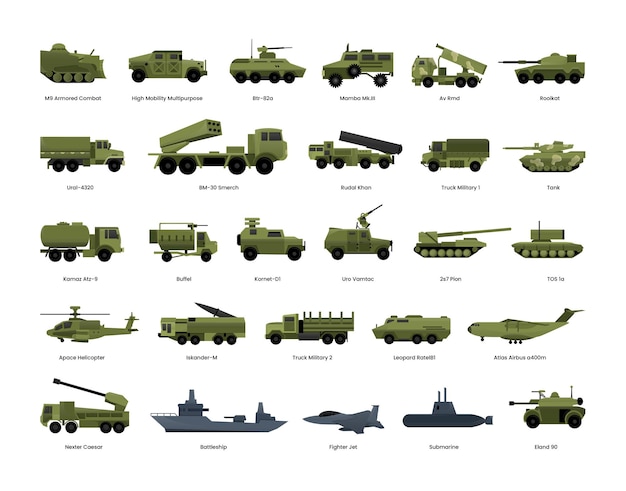
Credit: www.freepik.com
Armored Fighting Vehicles
Armored Fighting Vehicles (AFVs) are key tools in modern armies. They protect soldiers and provide firepower on battlefields. These vehicles combine armor, mobility, and weapons to perform various combat roles. Understanding different types of AFVs helps to see their unique uses in warfare.
Main Battle Tanks
Main Battle Tanks (MBTs) are powerful and heavily armored. They carry large guns to destroy enemy targets. MBTs move fast and survive strong attacks. Their main job is to lead attacks and break enemy lines. Tanks balance speed, protection, and firepower well.
Infantry Fighting Vehicles
Infantry Fighting Vehicles (IFVs) carry soldiers close to the fight. They offer protection and can fight alongside troops. IFVs have machine guns or cannons for defense. They help infantry move quickly and safely on the battlefield. IFVs are more armed than regular transport vehicles.
Armored Personnel Carriers
Armored Personnel Carriers (APCs) focus on safely moving troops. They have strong armor but lighter weapons than IFVs. APCs protect soldiers from small arms and shrapnel. They are useful for transporting groups across dangerous areas. APCs improve soldiers’ safety during movement.
Reconnaissance Vehicles
Reconnaissance vehicles play a key role in military operations. They gather important information about enemy positions and terrain. These vehicles move quickly and quietly to avoid detection. Their design balances speed, protection, and communication tools.
Different types of reconnaissance vehicles serve specific missions. Each type offers unique advantages on the battlefield. Understanding these helps appreciate their value in modern warfare.
Light Armored Cars
Light armored cars are fast and agile. They have light armor to protect against small weapons. These vehicles often carry cameras and sensors to scout areas. Their small size helps them access tight spaces. They provide quick updates on enemy movements.
Scout Vehicles
Scout vehicles are designed for deep reconnaissance missions. They combine speed and stealth to explore enemy territory. Equipped with advanced communication gear, they send real-time data back to commanders. Some have weapons for self-defense. Their main goal is to find threats early.
Unmanned Ground Vehicles
Unmanned ground vehicles (UGVs) operate without a driver. Remote control or artificial intelligence guides them. UGVs can enter dangerous areas without risking soldiers. They carry cameras, sensors, and sometimes weapons. These vehicles extend the reach of reconnaissance teams safely.
Support Vehicles
Support vehicles play a vital role in military operations. They help keep the main forces moving and effective. These vehicles do not fight directly. Instead, they provide essential services to the troops on the field. They repair, recover, and manage command tasks. Without support vehicles, military missions would slow down or fail.
Engineering Vehicles
Engineering vehicles build and repair roads, bridges, and fortifications. They clear obstacles like mines or debris. These machines help troops cross difficult terrain. Some have cranes, bulldozers, or drills attached. They prepare the battlefield for safer movement. Their work is quick and precise.
Recovery Vehicles
Recovery vehicles tow damaged or stuck vehicles from the battlefield. They use winches, cranes, and heavy-duty hooks. These vehicles save valuable equipment from being lost. They keep the army’s vehicles ready to fight. Speedy recovery reduces downtime and increases mission success.
Command And Control Vehicles
Command and control vehicles serve as mobile headquarters. They have advanced communication gear inside. Leaders plan and direct operations from these vehicles. They keep contact with troops and other units. These vehicles ensure smooth coordination during missions. They play a key role in decision-making.

Credit: www.popularmechanics.com
Artillery And Missile Systems
Artillery and missile systems play a crucial role in modern military operations. These vehicles deliver powerful firepower and precise strikes on distant targets. They help control battlefields and protect troops from enemy attacks.
These systems come in various forms, each designed for specific roles. Their mobility allows forces to move quickly and respond to threats effectively. Below are some key types of artillery and missile vehicles used by armed forces worldwide.
Self-propelled Howitzers
Self-propelled howitzers combine heavy artillery with mobility. They mount large guns on armored vehicles. These howitzers can fire shells over long distances. Their ability to move fast helps avoid enemy fire. Troops rely on them for strong fire support in battle.
Multiple Launch Rocket Systems
Multiple launch rocket systems (MLRS) launch several rockets at once. They cover wide areas with powerful rocket fire. These vehicles provide rapid, intense bombardment. MLRS can target enemy positions, supply lines, and fortifications. They increase the firepower and flexibility of ground forces.
Surface-to-air Missile Vehicles
Surface-to-air missile vehicles defend against enemy aircraft and missiles. They carry missile launchers on mobile platforms. These vehicles track and destroy airborne threats quickly. Protecting troops and key sites is their main job. They enhance air defense and battlefield safety.
Logistics And Transport Vehicles
Logistics and transport vehicles play a crucial role in military operations. They move troops, supplies, and equipment to where they are needed. These vehicles ensure that armies stay supplied and ready for action. Without them, missions would face delays and shortages.
These vehicles come in various types. Each type has a specific job to support the military’s needs. They must be reliable and capable of handling tough terrains and heavy loads.
Military Trucks
Military trucks are the backbone of transport fleets. They carry soldiers, cargo, and equipment across long distances. Designed to handle rough roads, these trucks are durable and strong. They come in many sizes, from small pickups to large cargo haulers. Their versatility makes them vital in many military tasks.
Fuel Tankers
Fuel tankers supply fuel to vehicles and aircraft in the field. They carry large amounts of gasoline or diesel safely. These tankers keep military machines running smoothly during missions. Their design focuses on safety to prevent leaks or explosions. Fuel tankers often operate in risky areas, making their role essential.
Ammunition Carriers
Ammunition carriers transport weapons and explosives to front-line units. They protect their cargo with strong armor to avoid damage. These vehicles ensure soldiers have the ammo needed for combat. Speed and security are key features of ammunition carriers. They help maintain constant firepower during battles.
Specialized Combat Vehicles
Specialized combat vehicles serve unique roles on the battlefield. They are designed for specific missions that standard vehicles cannot perform. These vehicles enhance the army’s ability to fight in difficult environments.
Each type offers distinct advantages. They protect soldiers, gather intelligence, and support combat operations. Understanding these vehicles helps to appreciate modern military tactics.
Amphibious Vehicles
Amphibious vehicles can move on land and water. They allow troops to cross rivers and lakes easily. These vehicles are crucial for beach landings and river crossings. Their design combines wheels or tracks with a sealed hull. This prevents water from entering and keeps the vehicle afloat.
Mine-resistant Ambush Protected Vehicles
Mine-Resistant Ambush Protected (MRAP) vehicles keep soldiers safe from explosives. They have strong armor and a V-shaped hull. This design deflects blasts away from the vehicle. MRAPs reduce injuries from roadside bombs and mines. They are vital in areas with high risk of ambushes.
Electronic Warfare Vehicles
Electronic warfare vehicles disrupt enemy communications and radar. They use special equipment to block or intercept signals. These vehicles protect friendly forces from electronic attacks. They also gather information by scanning enemy transmissions. Their role is key in modern, technology-driven battles.
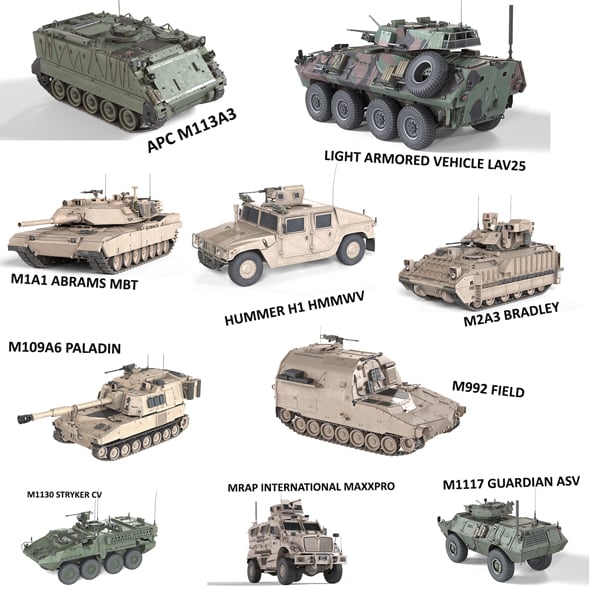
Credit: 3docean.net
Conclusion
Military vehicles serve many important roles on the battlefield. Each type has unique features and uses. Tanks offer strong protection and firepower. Armored personnel carriers help move soldiers safely. Utility vehicles support different tasks like transport and communication. Knowing these vehicles helps us understand military operations better.
The variety shows how armies prepare for many challenges. Military technology continues to change and improve. This keeps forces ready and effective in any situation.